|
Wed
Mar 18
Reception at 5:30 Talk Begins at 6::00 PM
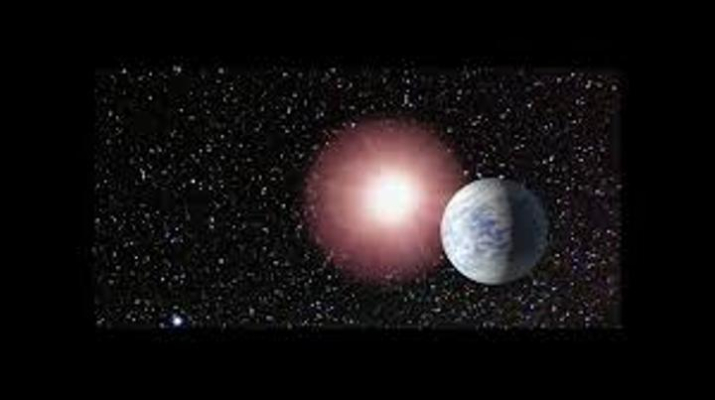
One in every five sunlike stars in the Milky Way may have an Earth-sized planet circling it in the Goldilocks zone—the sweet spot where liquid water could exist. That's according to a new analysis of data from the Kepler spacecraft. Sara Seager, an exoplanet hunter at MIT, talks about what's next in the hunt for Earth 2.0.Sara Seager is an astrophysicist and planetary scientist exploring the possibility of life throughout the galaxy. Adapting the principles of existing planetary science to the study of exoplanets (planets outside the solar system), she is quickly advancing a subfield initially viewed with skepticism by the scientific community. A mere hypothesis until the mid-1990s, nearly 900 exoplanets in more than 600 planetary systems have since been identified, with thousands of more planet candidates known. Early in her career, Seager determined that the nature of an exoplanet’s atmosphere could be observed during an eclipse, when the planet’s atmospheric light spectrum is especially distinct from its much brighter host star. She then envisioned and formalized a comprehensive framework for guiding and interpreting observations of planets in this manner, including parameters for calculating planet density and remotely detecting biosignature gases (spectroscopic signatures of chemical compounds that are indicative of life) in their atmospheric spectra. Her early predictions led to the first detection of an exoplanet atmosphere by observations from the Hubble Space Telescope. 0 Reviews
Event Photos & Videos |